
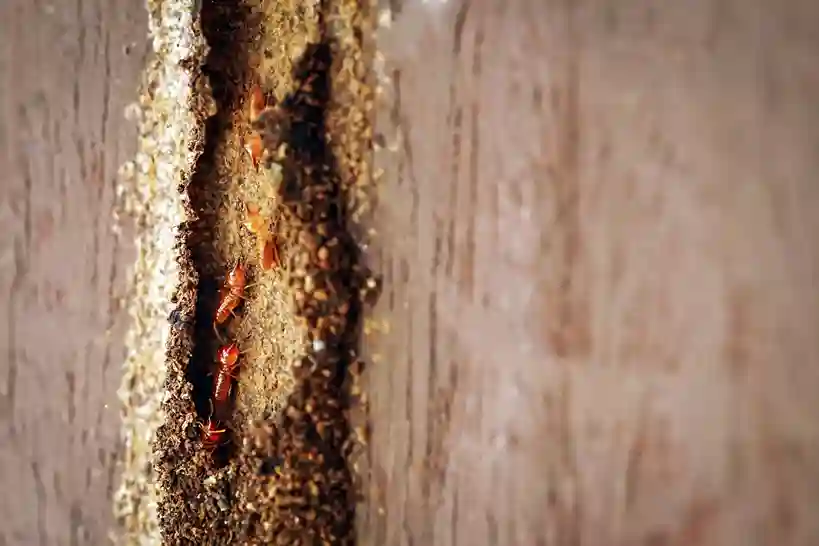
Termites aren’t just a headache for everyday homeowners. They cause billions of dollars in structural damage every single year, and commercial spaces face some of the highest financial stakes.
This silent threat is buried beneath your property and can quietly destroy its structural integrity. Termites cause an estimated $6.8 billion in property damage annually in the United States, according to data from the National Pest Management Association (NPMA).
Why Commercial Properties Face Higher Risks
It is an incredibly common mistake to assume that modern commercial properties are completely immune to termites. Many business owners believe that because their facility is made of steel, concrete, glass, and cinder block, bugs simply aren’t a threat.
The reality is that termites do not need a fully wooden building frame to cause chaos. Commercial spaces are highly vulnerable due to specific structural and environmental layout designs.
Cellulose-Rich Interiors
Even inside a solid concrete high-rise, termites find plenty of food. They feed on cellulose, which is found in standard drywall paper backing, wooden baseboards, storage boxes, carpet padding, and custom office cabinetry.
Hidden Infiltration Pathways
Commercial facilities often feature large, complex footprints with expansion joints, utility chases, and underground service lines.
Subterranean termites exploit these hidden gaps, crawling straight through tiny hairline cracks in a concrete slab to enter an office or retail area completely unseen.
Extensive Moisture Sources
Large properties contain massive plumbing networks and commercial cooling units. A small, hidden pipe leak or condensation puddle behind a utility wall creates a permanent pocket of high humidity.
This moisture gives subterranean colonies exactly what they need to survive and expand without ever needing to return to the external soil.
What Does Termite Damage Look Like
Catching an infestation early requires knowing how to spot the subtle, physical warning signs before structural collapse occurs. Because these pests tunnel inside materials to avoid open air, you need to know exactly what termite damage looks like in a commercial layout:
- Mud Tubes on Foundations: Subterranean termites construct pencil-thin mud tubes along concrete foundation walls, support piers, and plumbing pipes to travel safely between the ground and your building.
- Blistered or Rippled Drywall: As termites eat the paper backing inside your walls, the exterior paint or drywall surface will often blister, ripple, or look like it has hidden water damage.
- Hollow-Sounding Structural Timber: Wooden door jambs, support columns, or window frames that look solid but sound completely hollow when tapped with a tool indicate internal tunneling.
- Faint Piles of Frass: Drywood termites push their waste out of tiny kick-out holes, leaving behind distinct, sand-like piles of fecal pellets near baseboards or window sills.
- Discarded Swarmer Wings: Finding piles of small, translucent wings scattered near interior light sources or window sills is a surefire sign that a reproductive colony has recently swarmed inside your property.
Sustainable Commercial Prevention Strategies
Protecting your real estate investment requires a proactive, multi-layered approach rather than waiting around for active damage to appear. Implementing routine building envelope updates keeps the local insect population at bay.
Enforce Strict Moisture Management
Because moisture is the primary catalyst for termite activity, property managers must fix plumbing leaks and roof drips right away. Keep exterior gutters clear and ensure that commercial HVAC lines drain water far away from the concrete foundation perimeter.
Eliminate Earth-to-Wood Contact
Never allow structural wood framing, exterior siding, or decorative wooden steps to come into direct contact with the ground soil. Keep landscaping mulch beds pulled back at least a foot from the building’s foundation line. It’s the damp mulch that serves as a perfect nesting ground for traveling colonies.
Seal Entry Points Along the Slab
Regularly inspect the perimeter of your building for cracks and settling shifts. Use heavy-duty concrete sealant or professional-grade caulk to fill open spaces around utility pipe penetrations. Also, fix the expansion joints to block insect pathways.
Secure Your Facility From Termite Damage
Managing termite risks in a commercial property is about protecting your business continuity and asset valuation. A severe infestation can force immediate structural closures.
Schedule your termite inspection with Pro-Spect Inspection Services. We deliver professional commercial inspections designed to locate hidden infestations and help keep your infrastructure safe.